
Diversity can be found in many forms across Pakistan’s varied topography, from the snowy peaks of Gilgit-Baltistan to the arid deserts of Thar to the lush agricultural plains of Punjab. This variation means that not all tree species will do well in every location. When selecting the best trees for Pakistan, it is important to consider your region’s climate, soil type, and water availability. Choosing the right species will ensure healthy growth, provide long-term environmental benefits, and support a sustainable supply of fruits, timber, or shade for years to come.
Are you looking for some shade for your property? Are you hoping to grow fruit for your family? And are you interested in harvesting timber as an investment opportunity? Do you want to plant trees that will have a significant impact on reducing climate change? Making the right species selection will have a major influence on your success with growing these trees.
This guide provides information on the most suitable types of trees for Pakistan’s various geographical regions, their economic values (costs), their ecological benefits, and the maintenance and support necessary for those trees.
Why Tree Plantation Matters in Pakistan
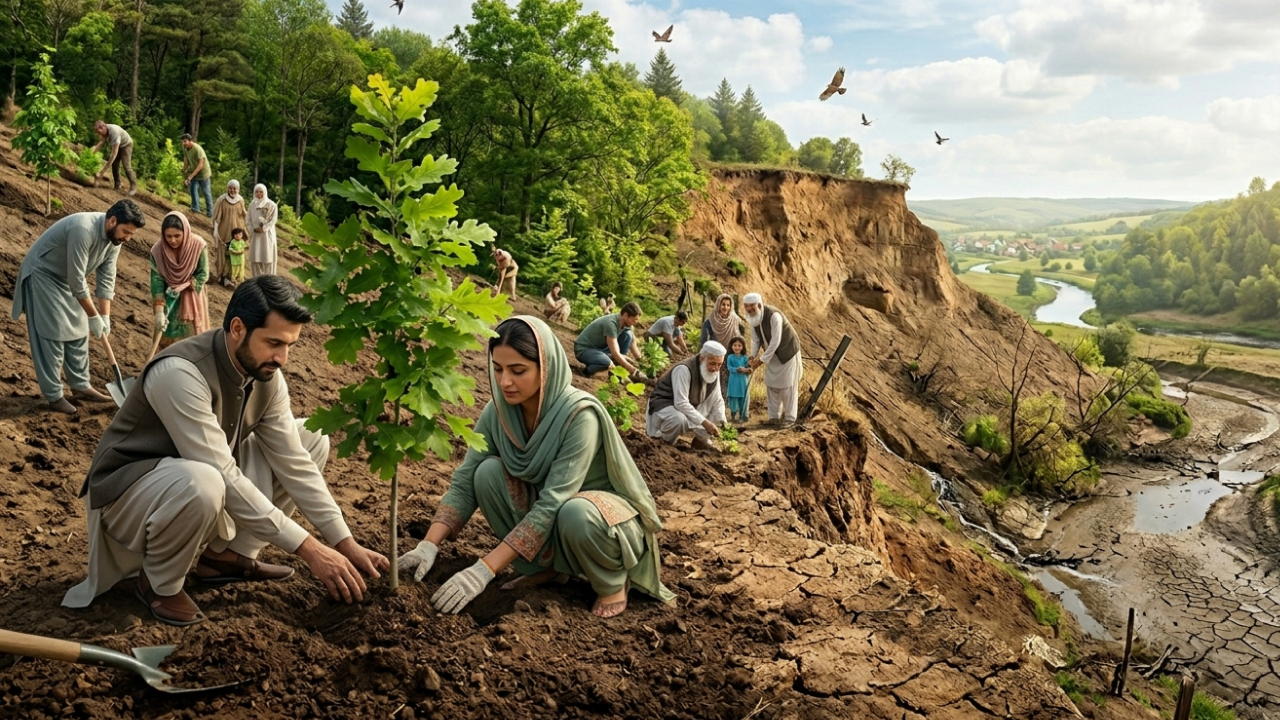
Tree planting has numerous advantages for individuals and communities alike:
- Reduced air pollution/ improved air quality
- Lower urban temperatures
- Soil erosion and desertification prevention
- Recharge groundwater supplies
- Provide habitat for birds and other wildlife
- Production of fruits and timber, as well as medicinal products
- Help fight climate change through carbon dioxide absorption
Given the ever-rising temperatures and growing environmental issues, more frequent tree plantings are one of the most beneficial methods to ensure a greener future.
Understanding Pakistan’s Climate Zones
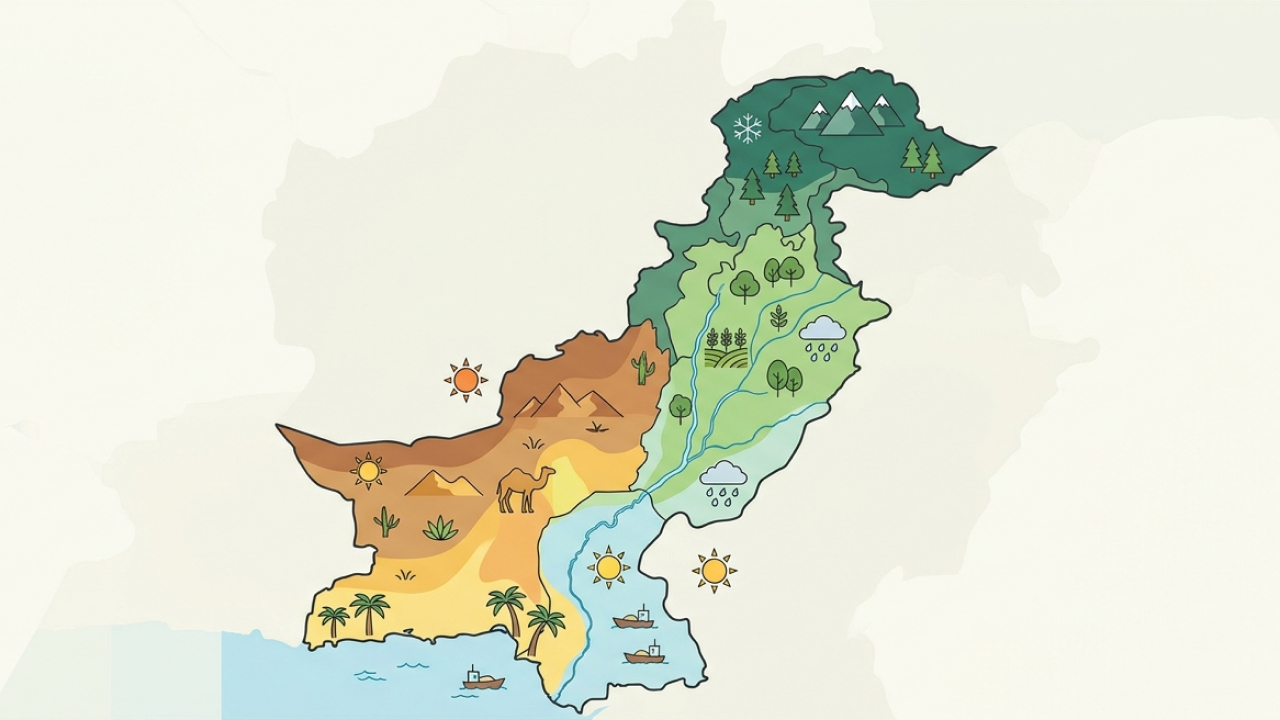
In order to choose a tree species that will thrive in your planting site, you should first consider the climate characteristics of the four major climatic zones in Pakistan:
Northern Highlands
- Gilgit-Baltistan
- Azad Jammu & Kashmir
- Murree
- Upper Khyber Pakhtunkhwa
Fertile Plains
- Central Punjab
- Southern Punjab
- Interior Sindh
Arid and Semi-Arid Regions
- Cholistan Desert
- Thar Desert
- Balochistan Plateau
Coastal Belt
- Karachi
- Gwadar
- Makran Coast
Different trees grow best in each of the above four climate zones because of different levels of rainfall, temperature, and types of soil found in each zone.
Best Trees for Punjab and Sindh Plains
Summer days are short and warm with long warm nights. Winter days are warm and dry, cool with shorter nights than summer days. There will be a great variety of trees producing both shade and fruit for environmental purposes in the fertile plains.
Shisham (Dalbergia sissoo)
The Dalbergia sissoo (Shisham) tree is one of the most valuable species of timber trees in Pakistan and is known as “The Pride of Punjab.”
Benefits:
- Provides high-quality wood
- Excellent shade tree
- Compared to many commercial timber trees (90% of all commercial timber trees in Pakistan), this is a superior fast-growing tree
- Nitrogen-fixing trees can significantly improve soil fertility
Neem (Azadirachta indica)
The Azadirachta indica (Neem) tree is the most widely used tree in urban settings in Pakistan.
Benefits:
- Naturally cleans the air
- Drought-resistant
- Medicinal properties derived from leaves and fruit
- Provides excellent shade
- Effective against numerous types of insects
Ideal Cities:
- Lahore
- Faisalabad
- Multan
- Karachi
- Hyderabad
Mango (Mangifera indica)
Pakistan is the third-largest producer of mangoes worldwide.
Benefits:
- Delicious fruit
- Very long lifespan
- Provides excellent shade
- Good return on investment
Best Trees for Arid and Semi-Arid Regions
Water scarcity is a serious issue in southern Punjab, Sindh, and Balochistan. These trees require very little irrigation to survive.
Jand / Kandi (Prosopis cineraria)
Jand or Kandi trees are the backbone of desert ecosystems.
Benefits:
- They are very drought-resistant.
- They supply livestock fodder.
- They improve the soil.
- They support biodiversity.
Ber (Ziziphus mauritiana)
It is a hardy fruit tree suitable for dry conditions.
Benefits:
- They produce nutritious food.
- They require very little water.
- They are suitable for poor soil.
- They help with soil conservation.
Rohida (Tecomella undulata)
Also known as Desert Teak.
Benefits:
- They provide high-quality timber.
- They have lovely flowers.
- They can grow in very harsh conditions.
- They require limited maintenance.
Best Trees for Northern Areas and Hills
Cold-tolerant species are required in mountainous areas to stabilise soil on steep slopes.
Deodar (Cedrus deodara)
The Deodar (Cedrus deodara) is the national tree of Pakistan and one of the largest and most beautiful conifers.
Benefits:
- It helps to minimise soil erosion.
- It has an exceptionally long life.
- It is important for reforestation.
- It provides habitat for mountain ecosystems.
Walnut (Juglans regia)
The walnut (Juglans regia) is an extremely profitable species for farmers living in northern areas.
Benefits:
- Produces high-quality nuts.
- Produces valuable timber.
- Has a high demand in the marketplace.
- Provides a long-term investment opportunity.
Blue Pine (Pinus wallichiana)
The Blue Pine (Pinus wallichiana) is the predominant tree species in northern forests.
- Reduces soil erosion on mountain slopes.
- Decreases the potential for landslides.
- Provides habitat for many species of wildlife.
Fast-Growing Trees in Pakistan
These species will either give you fast shade or a tree that grows fast.
Moringa (Moringa oleifera)
Sometimes referred to as “Miracle Tree.”
Benefits:
- Fast growing
- Edible and nutritious leaves
- Low water needs
- Works well for small land
Simal (Bombax ceiba)
A native tree species known for its fast growth and beautiful red flowers
Benefits:
- Good for attracting birds
- Provides good shade
- Helps improve biodiversity
Amaltas (Cassia fistula)
Known for its long, beautiful golden flowers.
Benefits:
- A very beautiful ornamental tree
- Resistant to pollution
- A very good tree for roadside planting and parks
Best Fruit Trees for Pakistan
You’ll find that fruit trees provide homeowners with many benefits, both environmentally and commercially.
Citrus (Kinnow, Lemon, Orange)
Ideal for Punjab.
Benefits:
- High value in the marketplace.
- It can be exported internationally as a popular crop.
- An excellent choice for home gardens.
Guava
Benefits:
- Require very little maintenance.
- High vitamin content.
- It can be grown in almost every area of the country.
Pomegranate
Benefits:
- Drought-resistant, capable of growing without irrigation.
- Very high market values.
- Grow well in both Balochistan and Punjab.
The Eco-Warriors – Trees for Modern Environmental Challenges
Some tree species can combat air pollution, heat impact, and degradation of the soil in a very effective manner.
Amaltas (Cassia fistula)
The Amaltas tree captures dusty airborne particles and enhances the beauty of the environment.
Neem (Azadirachta indica)
Azadirachta Indica (neem) will provide shade during the hottest months, therefore lowering the ambient temperature.
Kikar (Vachellia nilotica)
Vachellia nilotica (kikar) has developed strong, deep root systems, which give protection against soil erosion as well as improve soil structure.
Native Trees vs Invasive Species
Choosing native trees helps preserve local ecosystems.
| Native Trees | Invasive Trees | Why It Matters |
| Shisham | Eucalyptus (Safeda) | Excessive groundwater consumption |
| Amaltas | Conocarpus | Limited support for local wildlife |
| Kikar | Conocarpus | Can contribute to allergy concerns |
| Ber | Some imported ornamentals | Lower ecological value |
Why Native Trees Are Better
- Native trees have adapted to the local climate.
- They do not require as much maintenance.
- They provide habitat for our native birds and pollinators.
- Native trees support the local biodiversity.
Best Trees for Urban Homes and Small Gardens
If you do not have enough room in your backyard for larger trees, these types of trees can be planted at home or at work!
- Moringa – Grows quickly and offers lots of benefits.
- Lemon – Fruit-bearing trees with a small size and low maintenance requirements.
- Guava – Grow very compactly and require minimal work to keep them up.
- Amaltas – Nice-looking trees that do not have a large canopy size.
Conclusion
The act of planting trees in Pakistan goes way beyond just being an environmental obligation; it is also about investing in future generations. Whether you plant a Neem tree to provide shade, a Mango tree to produce fruit, a Deodar to contribute to conserving the ecology, or a Moringa tree to promote sustained development, each tree planted will have a lasting impact on creating a healthier and greener Pakistan.
Tree plantation is seen by many as a form of Sadaqah Jariyah, where the benefits of the tree will continue for many years afterwards through improved air quality, food production, food resources for wildlife and continued environmental preservation.
Take the first step today and plant one tree; together, we will create a cool, green and prosperous Pakistan for future generations.
Read More: