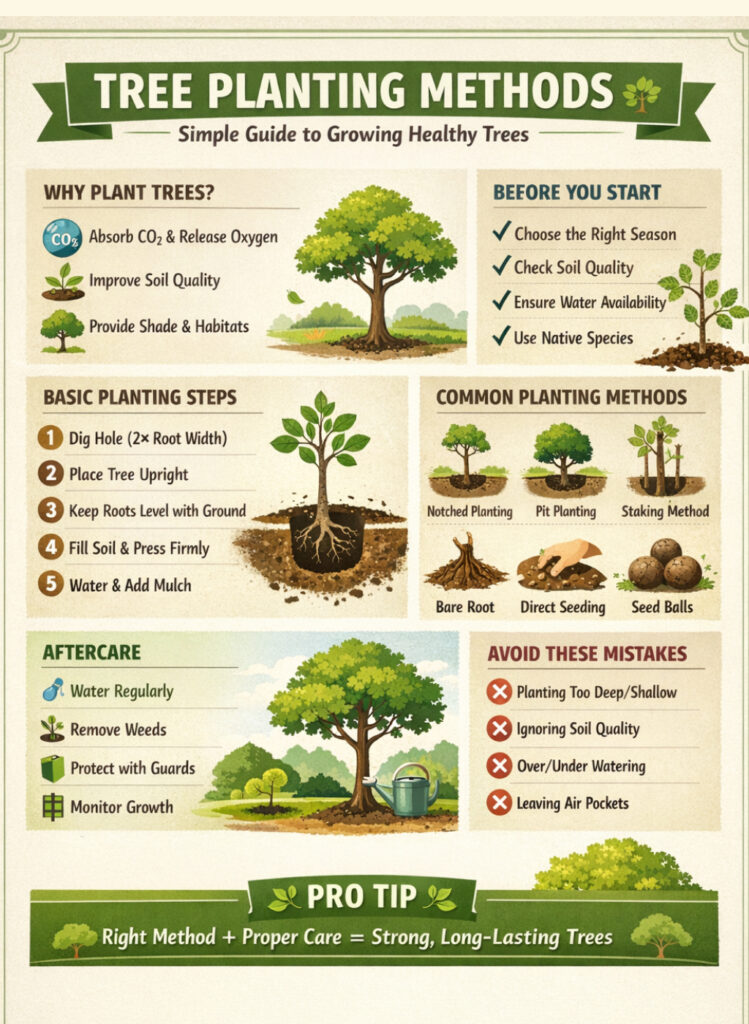
Planting trees is one of the best options for restoring ecosystems, combating climate change, and improving environmental health. However, simply putting a tree in the ground isn’t sufficient; tree planting methods play a crucial role in influencing a tree’s growth and longevity.
Tree-planting methods can be very simple (i.e., by using a shovel) or very sophisticated (i.e., by using advanced reforestation techniques). A better understanding of the wide range of reforestation techniques will help to ensure that your newly planted trees will grow and flourish.
This information will help you understand the various methods of planting trees, and give you enough detail to implement small-and large-scale reforestation programs.
The Importance of Tree Planting
Tree planting is essential to the survival of all living things on this planet. Trees remove CO2 from the environment and turn it into oxygen, improve soil quality, and provide habitats for animals and humans alike. Trees provide numerous benefits to humans – they provide shade, reduce overheating, and help to clean the air we breathe.
In addition to providing direct benefits to the environment and society, forestation can create jobs and support local businesses through various forms of agroforestry (e.g., food systems) and community-based activities. When done appropriately, tree planting will be an asset to both nature and society for many years to come.
Important Factors to Consider When Choosing a Sowing Method
Before selecting a planting method, consider the following:
- Climate or Season − Trees will grow best when planted at favorable times, such as in the spring, fall, or during rainfall. Choosing the right season is especially important when working with the best trees in Pakistan, as seasonal timing directly affects germination and survival rates.
- Soil Quality − Soil that is rich in nutrients and well-drained will provide a greater opportunity for tree roots.
- Water Availability − Adequate levels of moisture must be present during the early stages of growth.
- Tree Species − Native species tend to adapt better than exotic species to their environment, giving them a much greater chance of survival.
- Scale of the Project − Planting tree methods for small gardens differ from reforestation used to replant a large-scale forest.
Choosing the correct combination of these factors helps ensure that trees will be established successfully.
Site Selection & Preparation
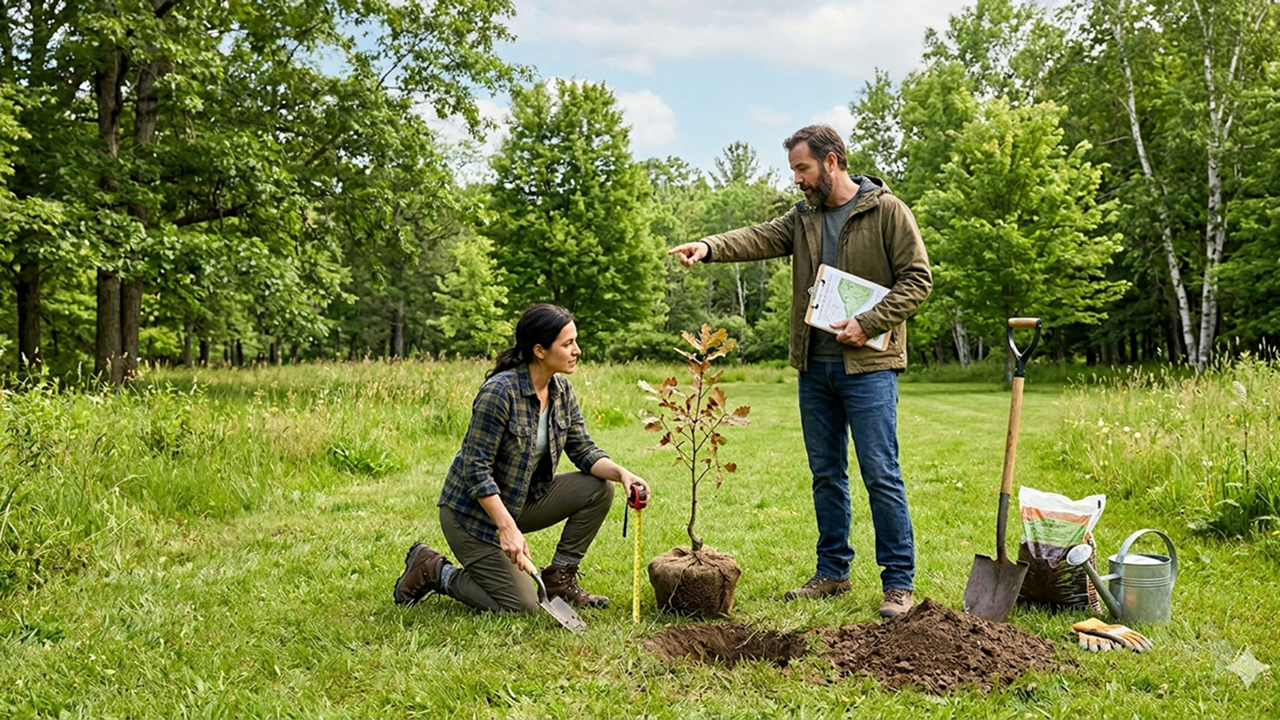
Choosing the right space for planting a tree is critical to its success. The right tree requires light, moisture, and food. Compacted soils and soils that are not of good quality should be avoided unless they can be improved.
The following are key steps to preparing the sowing area:
- Loosen compacted soils
- Remove debris and weeds
- Avoid interfering with existing underground utilities
- Prepare planting tools
When digging a hole for your tree, make sure the hole is wide enough to allow root development to occur easily. Adding compost or organic material can make a huge difference in terms of growth if there are poor soil conditions.
Traditional Ways to Plant Trees (A concise guide)
Increase your chances of successfully establishing a tree by following all sowing procedures and the benefits of the plantation.
Timing of Planting
If you want to maximize the chance of success for your newly planted trees, then it is essential that you plant during a period of time when temperatures are cooler and there has been adequate rainfall. This will allow the new tree’s roots to establish themselves before the arrival of extreme weather.
Transporting and Handling Trees
Trees are sensitive and therefore should always be handled with care:
- Never lift from the trunk only
- Always keep the roots moist
- Always store in cooler, shaded conditions
Dig the Sowing Hole
The hole should be:
- Twice the diameter of the root ball
- The same depth as the tree’s root system
These two things will help ensure sufficient room for root growth and allow the tree to remain stable.
Planting the Tree
When installing a tree in the ground, always:
- Set the tree upright in the hole
- Keep the root collar level with the ground, never below or above ground.
- Fill the hole with soil around the root ball and pack the soil very firmly in order to eliminate any air pockets from the topsoil surrounding it.
Watering and Mulching
Immediately after planting, water the tree and apply mulch around the tree for moisture retention and weed suppression. Make sure to keep the mulched material from touching the trunk of the tree.
Core Tree Planting Techniques
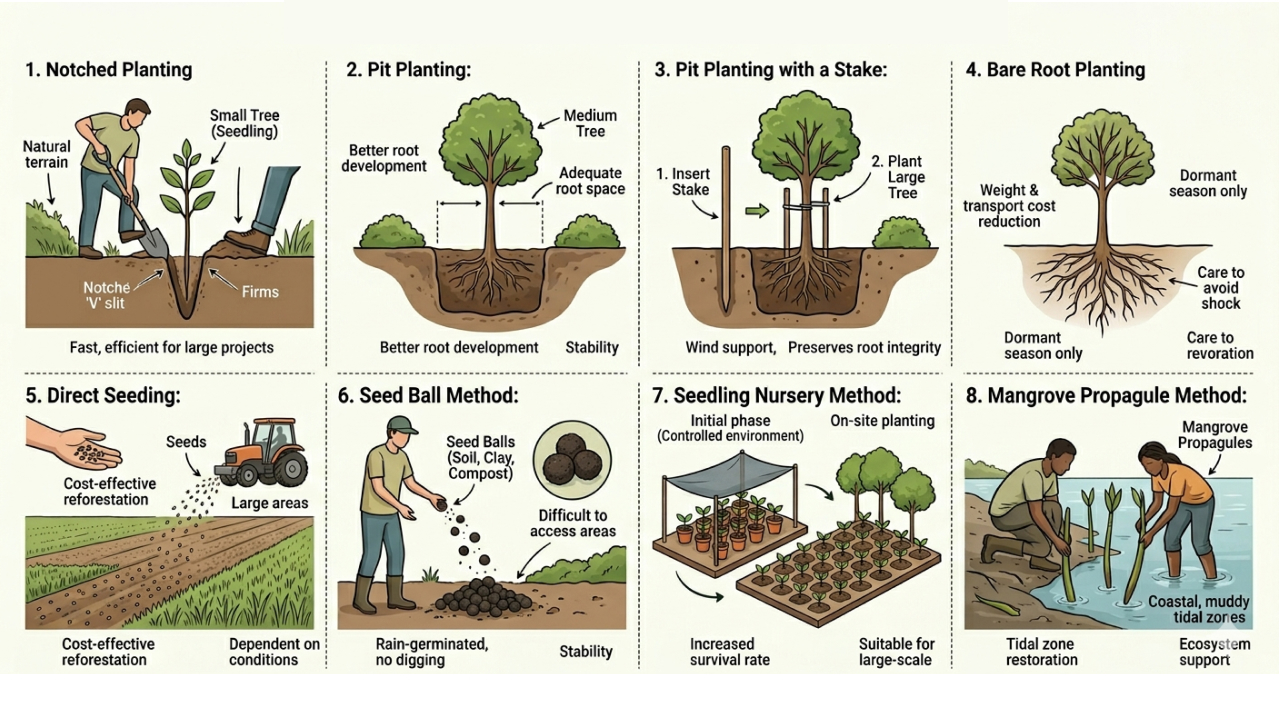
The type of planting technique used depends on the size of the tree being planted, the location where the tree will be planted, and the scale of the project.
Notched (Fast Method)
This technique works best for small trees because a slit is made in the ground, and the tree can then be inserted into this space quickly. This technique is especially efficient and is often used in large planting projects.
Pit
Pit planting is used for medium-sized trees. In this case, the hole created for the placement of the tree is of adequate size for the entire root system of the tree to be accommodated at once. This contributes to better overall development of the roots and helps ensure that they are stable.
Pit Planting with a Stake
Pit planting is commonly used to provide a large tree with the support it requires to sustain itself against the wind and other external factors. In order to preserve the integrity of the root system, the stake should be put into place prior to planting.
Bare Root
The technique of bare root planting involves removing all soil from the root system before planting. This technique reduces the weight and cost associated with transporting the tree; however, bare root sowing must be completed during the dormant season in order to avoid shock during the reforestation.
Direct Seeding
With this technique, seeds are placed directly into the soil instead of first germinating the seeds and creating seedlings before ensuring that they are growing into their respective trees. This technique is cost-effective and frequently used for the reforestation of very large areas. However, the ultimate success of a planting project is dependent on the environmental conditions as well.
Seed Ball Method
Seeds are housed within balls made from soil, clay, and compost and are then scattered over a given area of land. If germinated by the rain, the majority of the seeds will develop as new seedlings. This technique works exceptionally well in areas that are difficult to access.
Seedling Nursery Method
It is a method where seeds are initially sown in a controlled environment before being transferred to an actual site. Seedling survival rates are increased through this initial phase of growth, and this technique is suitable for large-scale planting projects.
Mangrove Propagule Method
Mangrove seedlings are planted directly into wet, muddy soil in coastal regions. Planting mangrove seedlings supports the restoration of ecosystems in tidal zones.
Sustainable & Innovative Plantation Techniques
These methods create long-lasting positive benefits for both people and the planet by improving the environment while restoring access to clean water.
- Farmer Managed Natural Regeneration – a tree growing technique based on the ability of trees to sprout from their root systems or remaining stumps. This offers an alternative method of producing large quantities of timber and other forest products; it is relatively inexpensive and can provide significant long-term benefits.
- Agroforestry Systems – combining trees with agriculture (growing crops alongside livestock) – promote soil health, enhance farmer productivity, and generate additional income for farmers.
- Large-Scale Reforestation – creating large tracts of forest using a variety of planting tree methods to maintain diversity and ecological balance across the landscape.
Seedling Care (Seedlings)
Success with trees is dependent on the health of the trees when they were planted. When planting, the trees must be within an appropriate growth size range and not too small or oversized.
Best practices are as follows:
- Handle seedlings slowly and carefully
- Do not expose roots to the sun
- Do not disturb the soil around the roots
Proper handling will help prevent harm to trees, thereby increasing survival rates.
Post-Planting Care & Maintenance
Ongoing care and maintenance are important to keep your trees healthy and growing well.
- Watering & Irrigation: Newly planted trees require consistent watering, especially during dry periods.
- Weeding & Mulching: Weeds compete for water and nutrients, so try to keep an area free of weeds for at least 1-3 years after planting.
- Protection Methods: Use tree guards or fencing to protect against damage from animals and people.
- Staking & Support: Remove stakes after the first year to allow for natural growth.
- Monitoring & Inspection: Check trees regularly to monitor health and replace damaged/dead trees when needed.
Common Mistakes in Tree Growing
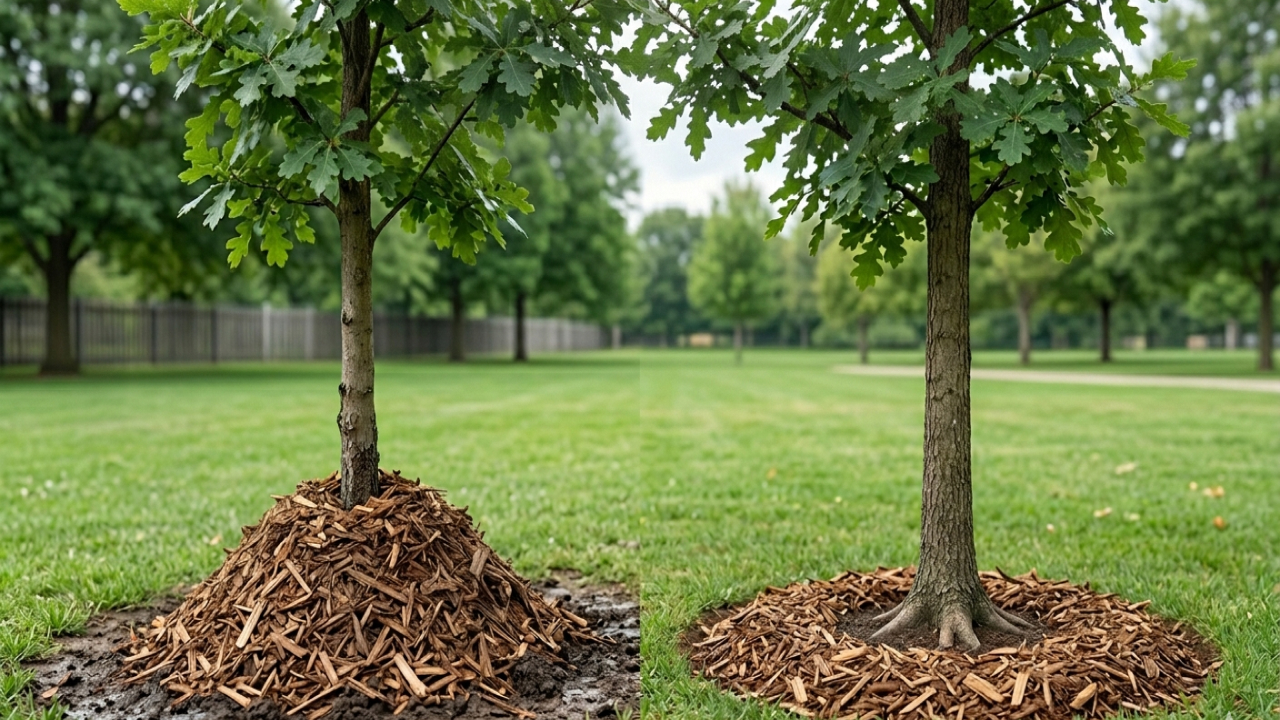
The following are some common errors associated with tree planting:
- Planting too deeply or too shallowly
- Ignoring soil quality
- Over or underwatering trees
- Not removing air pockets from the root ball.
These types of mistakes could drastically reduce the survival rate of your new trees/seedlings.
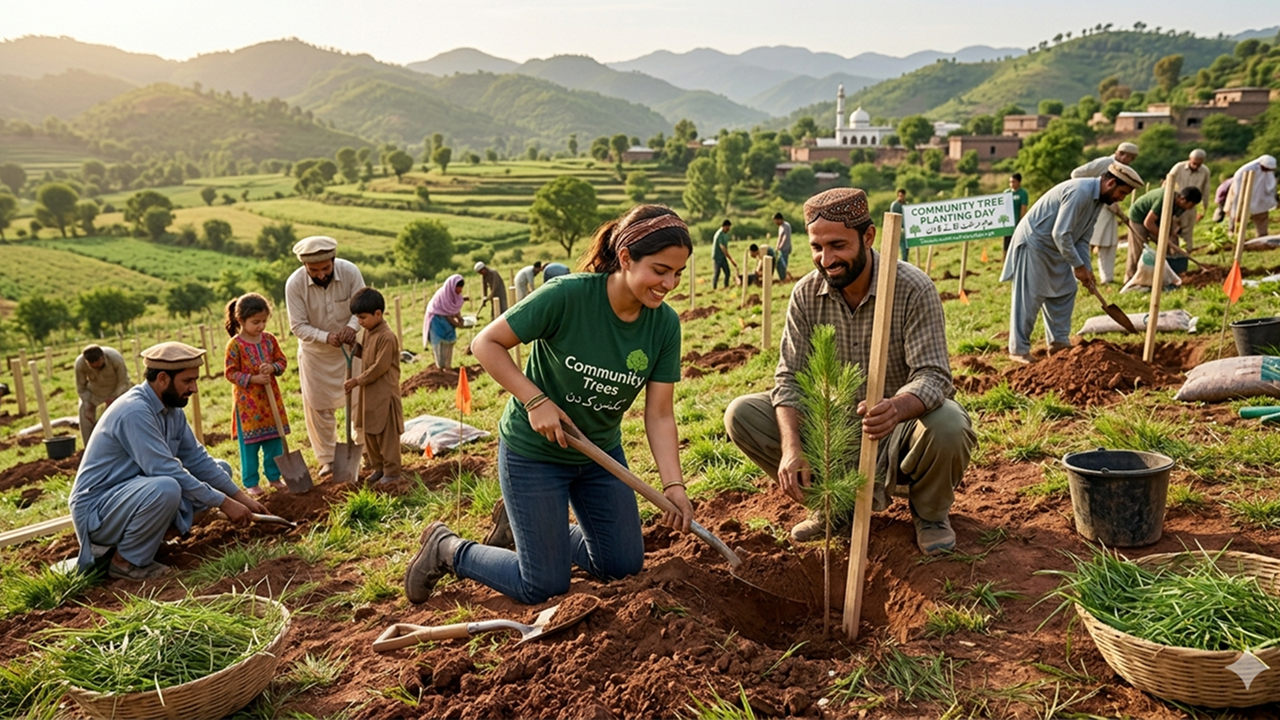
Community Involvement in Tree Planting
The impact of tree planting increases when you include the community. Participation by the community in tree planting provides local input regarding tree planting to:
- Increase awareness of trees
- Help provide long-term care for trees
- Foster a sense of environmental stewardship.
Using community events and partnerships as a way to achieve large-scale success in tree planting.
New Innovative Methods And Trends Going Forward
The way we plant trees today is changing with some of the latest innovations:
- Hydrogel technologies allow moisture to be stored in trees
- Reducing plastic consumption through eco-friendly tree nurseries
- Using satellite technology for real-time monitoring of how trees are being planted.
All three advancements drive towards making the tree planting process more sustainable and efficient.
Conclusion
Like so many things in our lives, planting a tree goes beyond simply digging a hole and inserting the baby tree into it. The entire forestation process requires several steps: preparation, using proper techniques, and maintenance after planting your new tree.
Through proper tree planting techniques and proper follow-up care/maintenance, our trees can provide us with positive environmental benefits for many years into the future. The proper methods of tree planting is important regardless of whether you will be planting one individual tree or a large-scale tree reforestation project.
Read More: