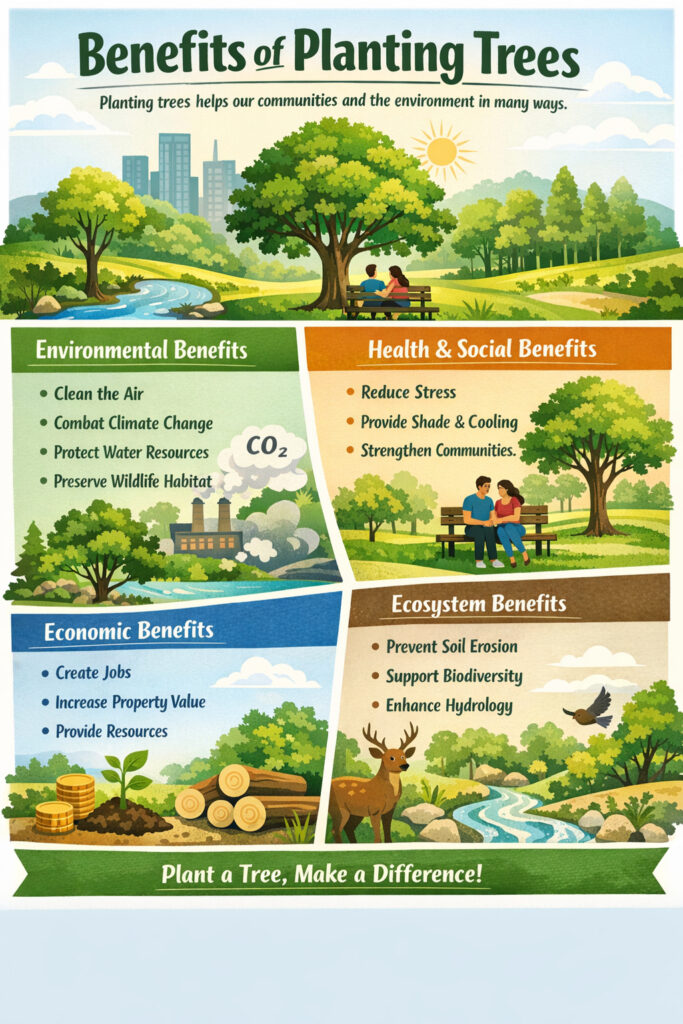
Tree planting is one of the easiest and most impactful things you can do to help improve your community and environment. The benefits of planting trees are numerous and far-reaching. Trees play a very critical role in sustaining life on Earth. Trees produce the oxygen we breathe, act as natural air conditioners, provide habitat for many species of animals through biodiversity, improve human well-being through shade, and more.
Tree planting is one of the most impactful actions for improving communities and ecosystems in Pakistan, where climate change, water scarcity, and land degradation are growing challenges. From the deserts of Cholistan to urban cities like Lahore and Karachi, trees play a critical role in sustaining life and restoring ecological balance.
Environmental Benefits of Planting Trees in Pakistan
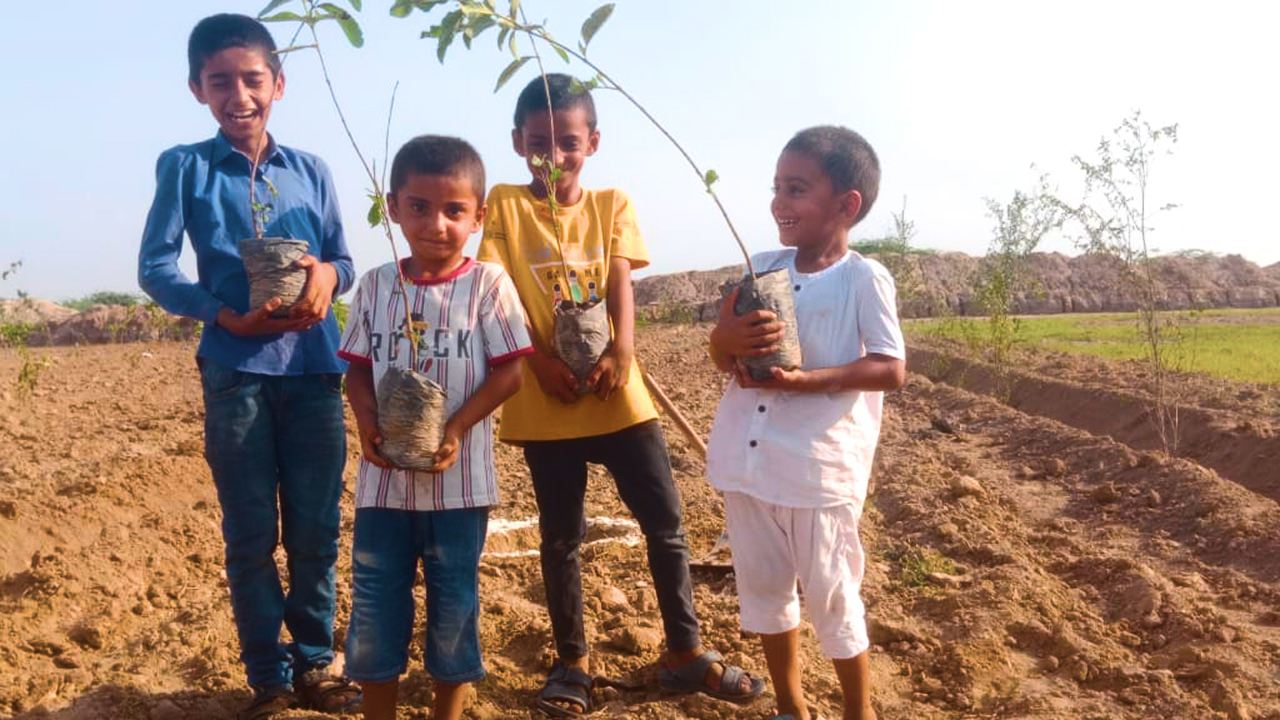
Trees are a vital component in creating balance in nature and protecting the environment.
Clean Air in Polluted Cities (Lahore, Karachi, Faisalabad)
Trees absorb pollutants like sulfur dioxide and nitrogen oxides, helping reduce smog — a major issue in Pakistani cities.
Climate Change Control in Vulnerable Regions
Trees absorb carbon dioxide, helping Pakistan reduce its carbon footprint and combat global warming.
Cooling Effect in Extreme Heat
In regions like South Punjab and Sindh, trees reduce temperatures and provide natural cooling — critical during heatwaves.
Water Conservation in Arid Areas (Cholistan, Thar)
Trees reduce evaporation and improve groundwater recharge, which is essential in desert regions.
Promote Clean Air-Declining Carbon Dioxide
Through photosynthesis, trees convert carbon dioxide into oxygen. By trapping dust, pollen, and other airborne pollutants such as sulfur dioxide and nitrogen oxides, trees also improve air quality significantly in both cities and rural areas.
Reduce Greenhouse Gas Emissions-Combat Climate Change
Trees naturally sequester carbon dioxide, one of the main greenhouse gases that causes global warming. The more trees planted, the less carbon footprint a community will have; thus, it will slow down the process of climate change.
Help Keep Temperatures Down and Provide Cooling
Trees also help keep cool by providing shade to nearby areas and creating moisture in the surrounding area by releasing moisture into the air. This helps reduce the urban heat island effect and makes cities more pleasant to be in during hot weather.
Defend the Ozone Layer and Minimize Smog
Trees take in gases, which create ground-level ozone and also diminish smog and consequently enhance air quality. This results in a better living environment, especially for individuals living in highly polluted metropolitan areas.
Eliminate Water Pollution
Tree roots and their surrounding soils filter out pollutants prior to entering other bodies of water. This enables rivers, lakes, and groundwater to remain free of pollutants.
Assist with Hydrology
Trees affect the hydrological water cycle by taking up precipitation and returning it to the atmosphere via transpiration; thus creating precipitation and maintaining the balance of nature.
Soil and Land Benefits of Trees
The best trees to grow in Pakistan are essential for maintaining healthy soil and preventing land degradation.
Prevent Erosion of Soils
When trees grow, their roots hold the soil in place. This prevents the topsoil from being eroded by wind or water (rain) in places that are hilly or susceptible to flooding. Trees stabilize soil in regions affected by floods such as Punjab and KPK.
Improving Fertility of the Soil
When leaves fall from trees (and all the organic material that the tree puts into the soil), they decompose and turn into nutrients that improve the fertility of the soil and make it easier for the plants to grow.
Increasing Agricultural Production
Trees provide shade from the sun, protect crops from the wind, and provide better soil quality than crops without trees. This results in higher yields (the quantity per unit area) and healthier animals than farms without trees.
Flood Prevention by Natural Means
When there is too much rain, trees absorb water from the ground and cause a decrease in water leaving the area. This will help to reduce the potential for flooding to occur in the surrounding areas. Tree planting is one of the most effective ways to stop the spread of deserts and restore barren land.
Environmental Importance of Trees
The environmental benefits trees provide also include assisting in conserving and managing water.
Minimizing Water Evaporation
Trees can reduce water loss due to evaporation by creating shade, which keeps the soil moist for a longer time period.
Enhancing Water Quality
Trees can improve water quality by filtering out pollutants before they reach the groundwater level, allowing for cleaner groundwater and safer drinking water supplies.
Enhancing Rainfall and Groundwater Supply
Trees are important for cloud formation and rainfall patterns that will eventually help in replenishing the surface supply of groundwater as well.
Biodiversity and Ecosystem Protection
Trees are the core element of an ecosystem, as they support many different types of living organisms.
They Provide Habitat for Wildlife
Birds, mammals, and insects all rely on trees as a source of shelter/nesting areas, as well as a food source, to survive.
They Support Biodiversity
Ecologically diverse and stable populations are created in forests and green spaces through the support of an extensive number of different species.
They Create Wildlife Corridors
Trees form networks that link together habitats, which allows for safe migration of animals, enabling them to have healthy populations.
They Protect Enough Ecosystems to Support Entire Ecosystems
Trees assist with the regulation of environmental conditions necessary for the survival of plants, animals, and microorganisms.
Supporting Rainfall Patterns
Trees contribute to local rainfall cycles, which are crucial for agriculture-dependent regions.
Groundwater Recharge
Important for areas where tube wells are overused, and water tables are dropping.
Biodiversity Protection in Pakistan
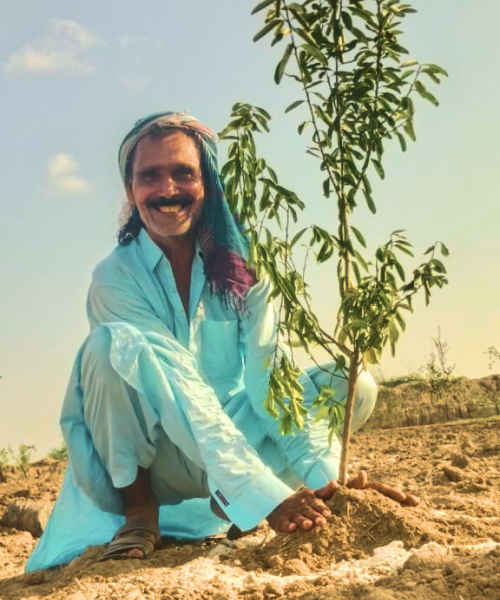
Trees help us to be healthy and improve our quality of life!
1. Contribution to Enhancement of Mental Health and Well-being
Having trees nearby can help to reduce stress, anxiety, or depression. Being around trees can improve your mood while helping you to think more clearly.
2. Encouragement to Participate in Physical Activities
The presence of green spaces encourages people to take part in outdoor recreational activities, such as walking, jogging, and other forms of recreation.
This leads to healthier lifestyles for those individuals using those green spaces.
3. Create Stronger Community Connections
When communities come together to plant trees, they experience a greater sense of belonging as well as develop a shared responsibility.
4. Decreased Sound Levels & Better Living Quality
Trees provide a natural sound barrier to diminish or eliminate the level of sound pollution within a given area, thereby creating a much quieter and more peaceful environment.
Economic Benefits of Tree Growing
Planting trees contributes to economic growth and financial stability.
Job Creation and Employment Opportunities
The planting of trees or establishing forestry-related operations creates numerous employment types, such as nursery workers, landscape designers, maintenance workers, and environmental managers.
Generate Income and Resources
The timber, fruit, and other products that can be produced from trees may provide income to individuals or companies.
Support Local Businesses
Businesses that are directly related to tree planting have an economic impact by providing income to suppliers, farmers, and other small businesses in a local area.
Promote Sustainable Industries
Tree planting can provide the basis for environmentally sound industries such as sustainable timber products and eco-tourism, and create an opportunity for long-term economic growth.
The Perks of Urban Trees
Trees are the foundation of enhancing urban environments and increasing property value.
Increase Your Property Value
The presence of trees around a home can make it more attractive to prospective buyers, and hence will also likely have a higher market value.
Enhance Your Curb Appeal and Livability
Trees improve the overall aesthetic quality of neighborhoods, therefore creating pleasant and livable environments.
Reduce Energy Costs
Trees provide shade to help keep homes cooler during hot summer months, and also provide some amount of protection against wind to help keep homes warmer during cold winter months.
Stormwater Mitigation
Urban trees assist with managing stormwater runoff; therefore, reducing stress on existing infrastructure.
Climate Resilience for Pakistan’s Future
Trees provide essential services for developing a sustainable future and creating climate-resilient communities.
Climate Change Adaptation
Communities use trees to adapt to extreme weather events, including heat waves, flooding, and violent storms.
Carbon Offset Opportunities
By planting trees, individuals and organizations can participate in carbon offset programs, which will help them reduce their total carbon footprint.
Protection Against Heatwaves & Floods
Trees act as natural buffers against extreme weather events.
Contribution to Sustainable Development Goals (SDGs)
Through their benefits to the environment, economy, and community, planting trees supports the achievement of the United Nations’ Global Goals.
Advantages to Businesses And Landowners
Planting trees gives long-term benefits to landowners and businesses alike.
Income Diversification
Landowners can produce income from timber sales, fruit sales, tourist activity, and other products made from trees.
Advantages Of Tree Farm Management
If the forest is managed correctly, land value increases and can produce sustainable economic benefits over time.
Funding Sources And Incentives
Many areas provide some form of funding assistance through conservation programs or government incentives related to tree planting.
Benefits of Trees Not Well Known
Trees have many less-known but important benefits.
- Protection from Ultraviolet Light: Tree canopies protect people against harmful ultraviolet light.
- Reduction of Noise Pollution: Trees with dense foliage absorb sound, thereby lowering noise levels in their environment.
- Creation of Improved Local Microclimates: Trees create cool and stable local microclimates.
- Enhancement of Aesthetics and Cultural Values: Trees provide beauty and cultural significance to communities and landscapes.
Practices that Help Enhance the Value of Trees
To receive the best long-term benefit from your trees, make sure they are being properly planned for from the outset. The choice of tree species, the locations where trees are planted, and the maintenance of biodiversity are three key factors in achieving sustainability and the continued growth of trees. Caring for and managing trees appropriately allows them to keep providing benefits over time.
Nakhl is working on transforming barren lands like Cholistan into green ecosystems through sustainable tree plantation, water management, and community-driven initiatives.
Conclusion
Planting trees is an investment for both planet Earth and society as a whole, as they provide a number of benefits such as improving air quality, stimulating the economy, and increasing the well-being of people who live there. Planting and maintaining trees now will help us all enjoy a greener and healthier world now and in the future.
Read More: