
Each year, Forests are vanishing at an incredible rate, along with these forests are some of the world’s most important ecosystems. Deforestation rates are leading to significant climate change and loss of biodiversity, as well as soil degradation. Reforestation offers a viable solution to restoring these long – or previously-closed forests.
Forest renewal refers to the tree plantings on sites where the tree canopy had been cleared or degraded due to manmade, natural, and climate-caused events. It plays a vital role in reversing environmental damage and reducing air pollution, as well as stabilizing and preserving ecosystem services.
Although often confused by people, reforestation and afforestation are separate but complementary approaches to restoring damaged environments; tree replanting focuses on restoring tree cover to sites that once supported a forested land use pattern.
What is Reforestation?
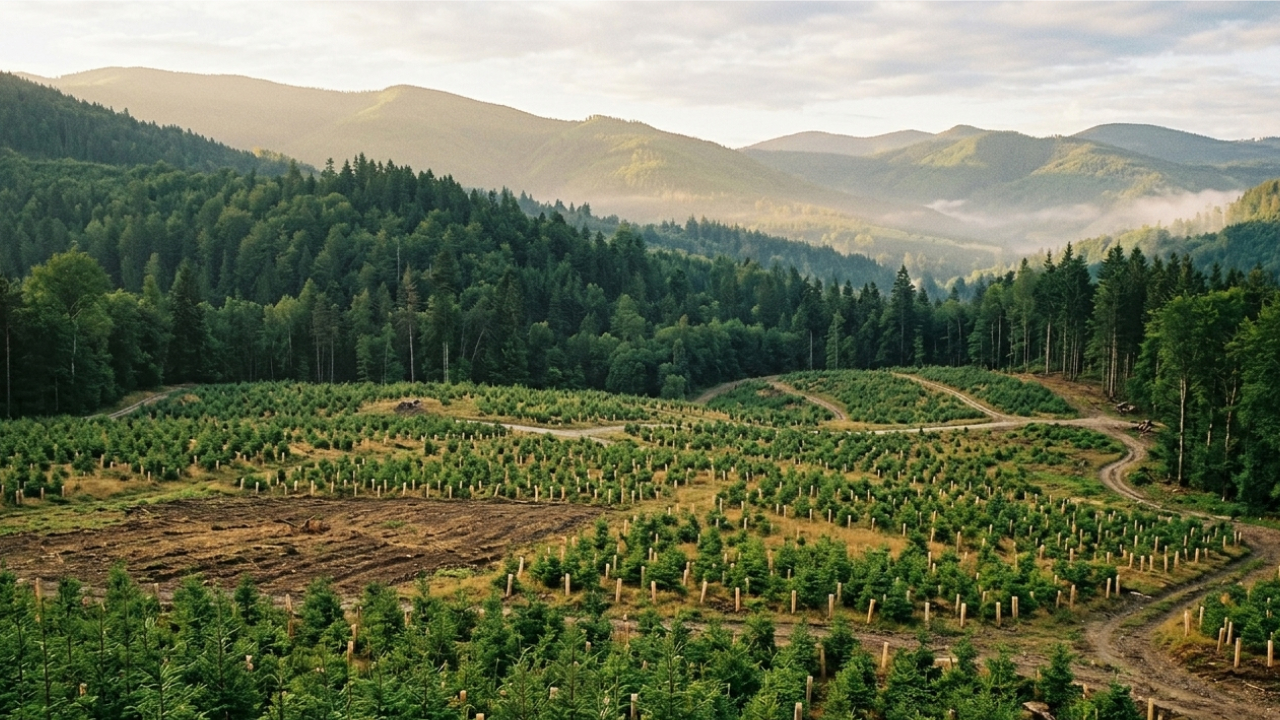
Reforestation describes the specific act of restoring forested areas that have been lost to clear-cutting or destruction due to human activity by reseeding those areas with trees.
There are two methods of forest regeneration:
- Natural Regeneration: A method where the forest will regrow naturally without much human interference.
- Artificial Regeneration: A method where humans actively plant seed or sapling trees.
Tree replanting is commonly employed to help areas recover from disruption caused by logging, agriculture, fire, mining, and urban/city development. The overall purpose of reforestation is to create an environment that will allow for wildlife to exist in a healthy habitat, restoring healthy soils, and providing an ecological balance.
Why Forest Restoration is Important?
Almost all of the earth’s forests are presently situated on only about 33% of the land area of the globe. There are also over 80% of all the earth’s species that reside in the world’s forests, but every year, millions of hectares of forests are removed, which negatively affects ecosystems, as well as many forms of life that rely on forests for sustainability.
To ensure the regeneration of forests and to protect these ecosystems, forest restoration is essential for:
- The restoration of wildlife habitats.
- The continued survival of a vast number of humans who depend on forests to live.
- The regulation of global weather patterns.
- The enhancement of the quality and productivity of soil, thus reducing land degradation.
If tree regeneration does not take place, the negative effects of deforestation on nature and the economic impact of trees will only continue to worsen.
Types of Tree Replanting
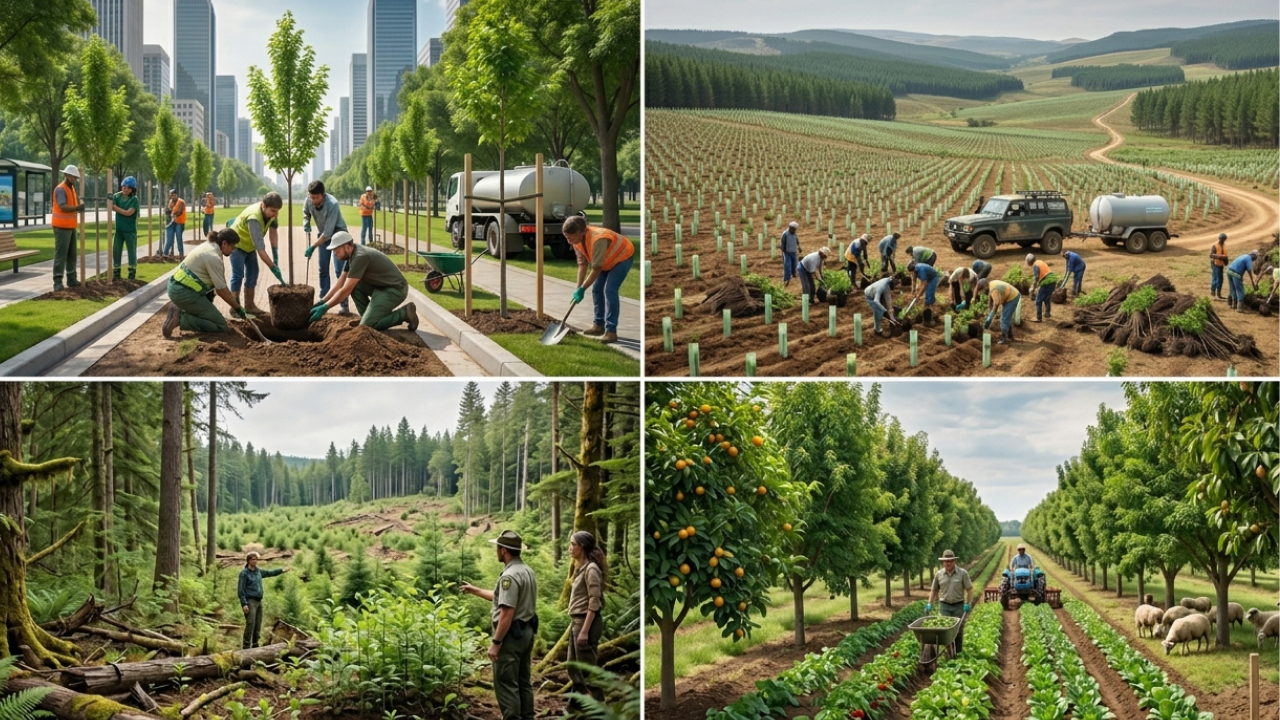
Different types of tree replanting address environmental challenges in both urban and rural settings.
Urban Reforestation
Tree planting in cities, known as urban reforestation, reduces heat, enhances air quality, and promotes mental health by adding more green space.
Rural Reforestation
Rural reforestation focuses on restoring larger areas of forest in rural or once forested regions to restore these ecosystems, improve soil health, and support agriculture.
Natural Regeneration
Natural regeneration helps to enable the forest to recover from disturbances over a long period of time. It may be the least expensive and most sustainable method if conditions allow.
Agroforestry Systems
Agroforestry uses trees integrated with crops or livestock to produce positive ecological and economic effects for farmers, as well as to maximize the production of the land.
Benefits of Forest Renewal
Reforestation delivers powerful environmental, social, and economic benefits on a global scale.
Benefits for the Planet
- Trees capture carbon dioxide, which reduces greenhouse gas emissions and mitigates climate change.
- Reforestation provides critical habitat for countless species, thus restoring biodiversity.
- Trees play a crucial role in maintaining rainfall patterns and the groundwater cycle.
- Tree roots stabilize soils by preventing erosion and enhancing soil fertility.
These highlight the long-term benefits of planting trees for environmental sustainability.
Benefits for People and the Economy
- Forest restoration projects create jobs.
- Tree regeneration supports rural development; therefore, these projects help to promote sustainable land use and agriculture.
- Reforestation improves public health because clean air and exposure to green spaces positively impact one’s overall well-being.
Tree replanting provides the only solution that produces both environmental and socio-economic benefits simultaneously.
Tree Regeneration and Climate Change
Reforesting forests plays an essential part in mitigating climate change by acting as a natural carbon sink. Because trees absorb and store carbon dioxide from the atmosphere within their trunks and roots, they provide many advantages in this regard.
When we look at the benefits of restoring forests, it helps to:
- Decrease the overall greenhouse gas levels in the atmosphere
- Slow down global warming
- Build climate change resiliency.
In addition, the Paris Agreement has shown support through international policies in creating a roadmap to utilize reforestation as a strategy to reduce greenhouse gases.
However, forest restoration should not be seen as the one and only solution. As it takes a lot of time for trees to reach maturity in order to store carbon. The fact that newly planted forests cannot leverage the same carbon storage capacity that has taken centuries to create through old-growth forests. Therefore, reforestation should be in conjunction with emission reductions.
Where Can Reforestation Be Done?
Forest restoration can take place in many different landscapes, including:
- Wildfire-affected areas
- Degraded agricultural land
- Floodplains & river banks
- Urban & peri-urban areas
- Wildlife Corridors & Protected Areas
Not all land is suitable for reforestation, so a thorough evaluation of the soil condition/environmental conditions, land-use, etc., is paramount to successful projects.
Techniques & Methods
There are several tree growing methods used in reforestation, depending on goals/location:
- Direct seeding: sowing the seeds right into the earth
- Sapling plantings: using saplings grown in a nursery.
- Selecting native species: making sure they’re ecologically compatible
- Site preparation: removing weeds, improving soils
Recent advancements (modern technology) have added techniques like drone planting, which can quickly & economically plant thousands of trees at once! Whatever method you choose will likely affect how successful & sustainable your long-term efforts to restore forests will be.
How Reforestation Projects Work (Step-by-Step)
Factors essential to a successful tree replanting process:
- Assessing Land: Determine the type of soil, the annual climate, and any previous land usage.
- Selecting Species: Native trees with proven ability to thrive in the climate selected.
- Developing a Nursery: Grow healthy seedlings in preparation for planting.
- Planting: Execute the planting method as planned.
- Monitoring & Maintaining: Ensure the long-term survival of the trees with appropriate watering, protection, and care.
Involvement of the local community is very important for achieving the long-term success and sustainability of many projects.
Frequently Asked Questions
It simply means planting new trees in places where trees have been removed or destroyed.
Through the process of photosynthesis, trees pull carbon dioxide from the air, which contributes to the global greenhouse effect, and they sequester this carbon in their wood and in the soil.
A newly created forest may take many decades until it reaches full maturity and can provide all of its potential environmental benefits.
No; however, it is a critical component of the broader strategy required to stabilize the climate, along with significantly reducing global greenhouse gas emissions.
Conclusion
Reforestation can help the environment recover from human activity while providing solutions for climate change and improving people’s quality of life through providing them with jobs and products they may need.
Although not an absolute answer to these problems, forest restoration is an effective option to repair environmental degradation in many areas of the world. Through the use of science-based plans, sustainable methods, and international collaboration, tree regeneration offers us the opportunity to build a healthier planet for future generations of all species.
Read More: